
NASA Unveils Ambitious Plan for a Permanent Human Presence on the Moon
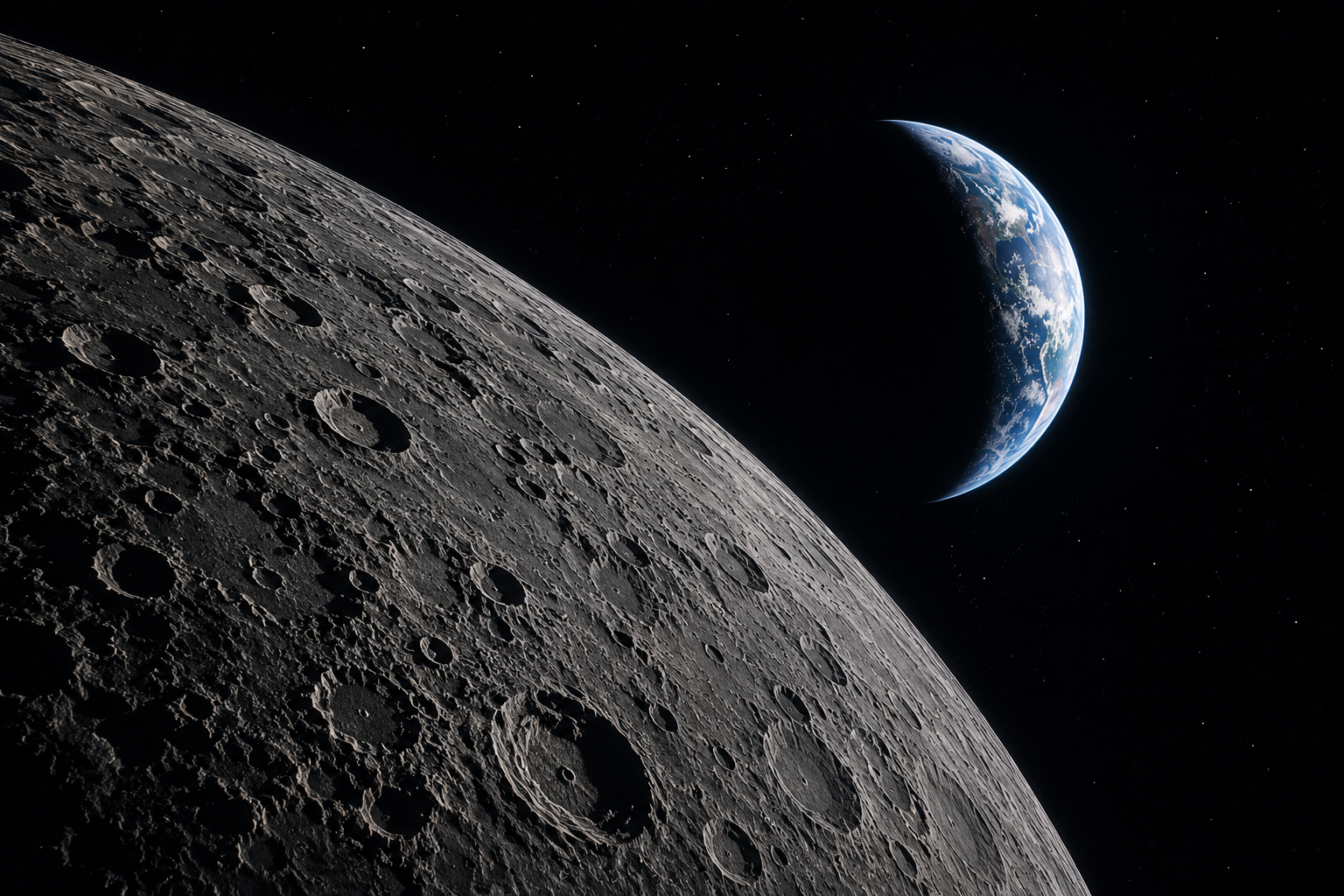
NASA Reveals Three-Phase Moon Base Strategy
NASA has announced an ambitious long-term plan to establish a permanent human presence on the Moon, with astronauts potentially living there within the next decade.
The proposed $20 billion Moon Base program will focus on the Moon's south pole region, an area of particular interest due to the potential presence of water ice and other valuable resources.
According to NASA, the project will be developed through three major phases, gradually transforming the Moon from a destination for short visits into a permanently inhabited outpost.
Phase One: Preparing for Human Settlement
The first phase is already underway and focuses on exploration, testing, and preparation.
NASA plans to conduct 25 launches and 21 lunar landings while delivering approximately four metric tons of equipment and supplies to the lunar surface.
Robotic missions will survey potential base locations, test new technologies, and study how humans can survive in the harsh lunar environment.
Several commercial partners have been selected to support the effort, including Blue Origin, Astrobotic, Astrolab, and Lunar Outpost, which will provide cargo landers, rovers, and transportation systems.
NASA's primary goal during this stage is ensuring that travel to and from the Moon becomes safe, reliable, and sustainable.
Phase Two: Building Lunar Infrastructure
Between 2029 and 2032, NASA plans to begin constructing permanent infrastructure on the Moon.
This phase includes deploying power systems, transportation networks, communications equipment, and other critical facilities required to support long-term operations.
Rather than temporary missions, the focus will shift toward creating a functional lunar settlement capable of supporting extended human activity.
The infrastructure built during this phase will lay the foundation for continuous habitation in the years ahead.
Phase Three: Humans Living on the Moon
Beginning in 2032 and beyond, NASA intends to establish a sustained human presence on the lunar surface.
Astronauts would rotate in and out of the Moon Base much like crews currently rotate aboard space stations.
The ultimate goal is to maintain a permanent foothold on the Moon while using the experience and technology developed there as a stepping stone for future missions to Mars.
If successful, this would mark the first time humans have lived continuously beyond Earth.
The Moon Is Far From Easy to Live On
While the vision is exciting, NASA acknowledges the enormous challenges involved.
The lunar environment is one of the most hostile places humans have ever attempted to inhabit. Surface temperatures can exceed 250°C in direct sunlight and plunge below -200°C in darkness.
Some permanently shadowed craters near the lunar poles experience even colder temperatures and have remained untouched by sunlight for billions of years.
The Moon also lacks an atmosphere, leaving astronauts exposed to radiation, solar storms, and extreme temperature fluctuations.
Overcoming these challenges will require significant advances in habitat construction, energy generation, life-support systems, and resource management.
A New Space Race Is Underway
NASA is not alone in pursuing lunar ambitions.
China continues to accelerate its space program and has publicly stated its goal of landing astronauts on the Moon by 2030. The country has already achieved major milestones, including the first-ever landing on the far side of the Moon and the operation of its own Tiangong space station.
As both nations push forward with increasingly ambitious missions, the Moon is rapidly becoming the next frontier in global space exploration.
Why This Matters
For decades, the Moon was primarily seen as a destination for scientific exploration. NASA's new strategy signals a major shift toward permanent off-world habitation.
If the project succeeds, the Moon could become humanity's first extraterrestrial settlement, serving as a research hub, a testing ground for deep-space technologies, and a launch point for future missions to Mars and beyond.
What once seemed like science fiction is now becoming a serious engineering challenge—and the next chapter of human exploration may begin on the lunar surface.