
Oxford Launches AI Cancer Scientist to Speed Up Cancer Vaccine Discovery
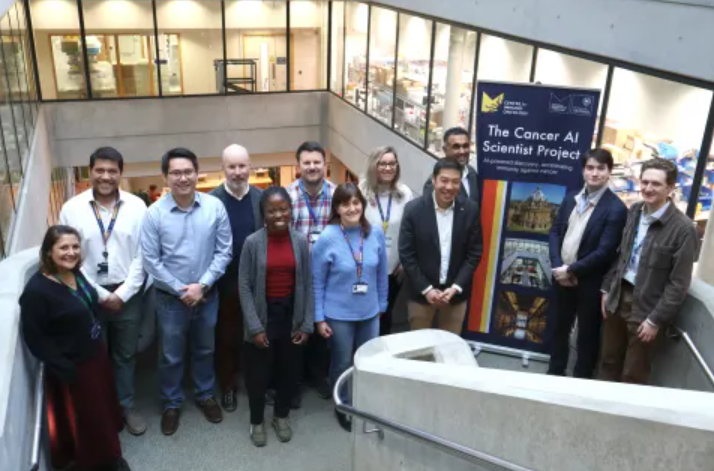
Oxford Unveils AI-Powered System for Cancer Vaccine Research
The University of Oxford has announced the launch of the AI Cancer Scientist, a groundbreaking project that aims to accelerate the discovery of cancer vaccines using artificial intelligence and laboratory automation.
Supported by funding from the UK's Advanced Research and Invention Agency (ARIA), the project seeks to solve one of the biggest challenges in cancer research: the slow and complex process of turning scientific discoveries into effective vaccine candidates.
Traditionally, cancer vaccine development can take 10–15 years because hypothesis generation, laboratory testing, and data analysis are often handled separately. Oxford's new approach combines these stages into a single continuous workflow powered by AI.
At the heart of the project are automated research pods that can generate vaccine hypotheses, conduct experiments, analyze results, and refine vaccine targets with minimal human intervention. By creating a closed-loop system, researchers hope to dramatically increase the speed and efficiency of cancer vaccine discovery.
Project lead Dr. Lennard Lee stated that combining AI, automation, and biological expertise could help scientists explore cancer biology at an unprecedented pace while focusing on outcomes that matter most to patients.
The AI Cancer Scientist is part of ARIA's broader AI Scientist programmer, which explores whether autonomous AI systems can carry out the complete scientific research cycle under real-world conditions. The findings could help shape the future of AI-driven scientific discovery in the UK and beyond.